
An hfinance client case study.
This is one of my favourite deals of the year, and on paper the big banks wouldn’t touch it. Self-employed for under three years. Vacant land. Commercial zoning. Company borrower. Every one of those is a policy knockout somewhere. Here’s how we got it done — and why the client is exactly the kind of borrower lenders should be fighting over.
The Client’s Situation
Our client is a builder in regional NSW. He spent the better part of a decade on the tools as an employed carpenter, then went out on his own about two years ago. It worked — his business now earns around $375,000 a year.
What makes him unusual is the discipline. By his early twenties he’d already put together three properties worth over $2 million, plus vehicles, gear and genuine cash reserves. At one stage he lived on-site in temporary digs on his own block to keep expenses at basically zero while he built the base. You don’t see that often. At any age.
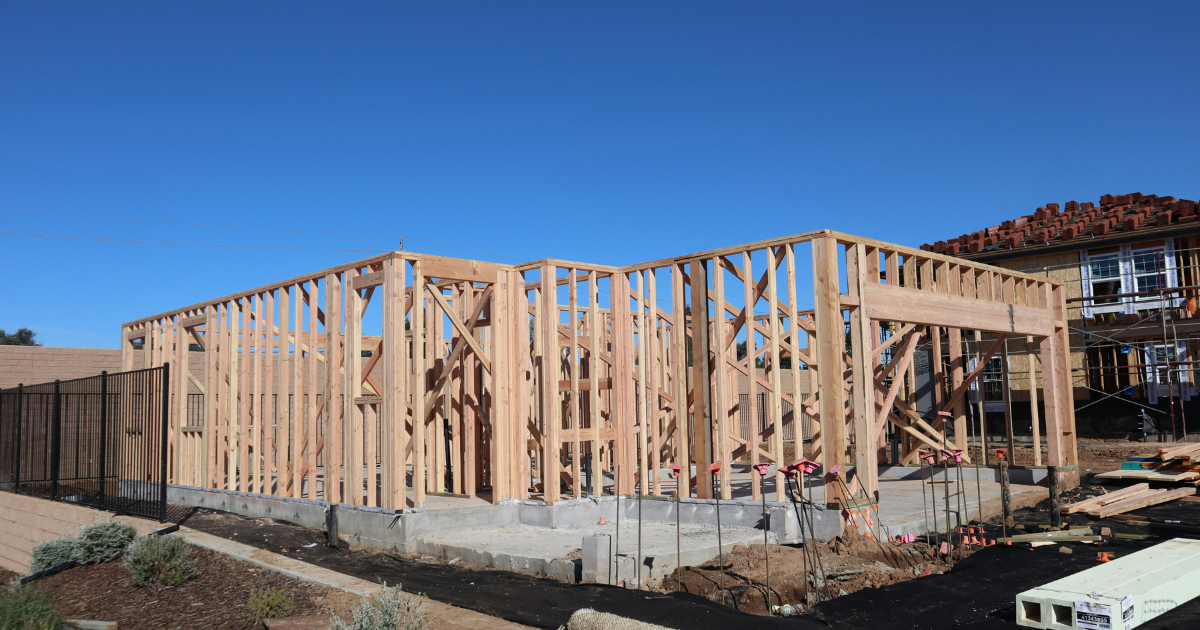
The next step was the obvious one for a builder: stop building other people’s projects and buy a site of his own. He found a vacant commercial-zoned block for $425,000.
The Challenge
Two years of ABN history is where most mainstream lenders get off the bus. Policy wants two full years of financials, and plenty want more before they’re comfortable. It doesn’t matter how strong the income is — the file gets filtered out before a credit assessor ever reads it.
Vacant land makes it harder again. No dwelling means no rent, and lenders see a thinner market if they ever had to sell it. Add commercial zoning and the panel shrinks to a handful, all at lower maximum LVRs.
Then there’s the structure. A site you intend to develop and sell shouldn’t be bought in your personal name — the tax and liability problems compound later. It belonged in a company, which moves the whole deal into business-purpose lending with different rules and different paperwork.
And the timing problem: between settlement and construction there’s a dead zone where the block earns nothing while approvals and costings get done. Principal-and-interest repayments through that stretch just drain the money that should be funding the build.
What We Did
We took the deal to a specialist lender whose policy actually fits this borrower, and structured it so the site is cheap to hold and ready to build on:
- Alt-doc income verification through his accountant — two strong years of trading assessed on their merits, instead of being rejected for not being three.
- Company borrower with a director’s guarantee. The site sits in the right entity from day one, rather than being moved later at the cost of another round of stamp duty.
- 70% LVR — realistic for vacant commercial land, with his deposit easily covered from savings.
- Two years interest-only to carry him through planning and approvals at minimal cost.
- A 30-year term underneath, so nothing forces a refinance on a deadline if the project timeline slips. They always slip.
The Numbers
| Item | Figure |
| Development site purchase price | $425,000 |
| Loan amount | $297,500 |
| LVR | 70% |
| Structure | Company borrower, 30-year term |
| Repayments during planning phase | Interest-only (2 years) |
| Documentation | Alt-doc (accountant-verified) |
The site is now controlled, the holding cost is minimal, and his cash is preserved for the build. When construction finance comes up, the hardest part — owning the land — is already done.
If You’re a Self-Employed Tradie
Short ABN history doesn’t mean you can’t get finance. It means the big banks aren’t your market yet — specialist lenders will assess what you can actually verify, and the trade-off is rate. For a deal that makes money, that trade is usually worth taking.
Get the entity right before you sign anything. Moving a development site out of your personal name later triggers duty and tax events you could have avoided entirely. And don’t be shy about your track record — savings history, clean credit, a portfolio built young. That story changes how an assessor reads your file, and part of my job is making sure they can’t miss it.
How We Approach These Deals
Self-employed and construction clients are core business for HFinance. We know which lenders genuinely take short trading histories, how vacant land and zoning move the LVR, and how to set up the site purchase so the construction loan that follows is a step rather than a fight. The aim isn’t just settling this loan — it’s sequencing it so the next three are easier.
This article is general information only and does not constitute credit, financial or tax advice. It does not take into account your objectives, financial situation or needs. Lender criteria, LVR limits, government charges and interest rates are subject to change and vary case by case. Business-purpose lending is assessed differently from consumer credit and entity structuring should be confirmed with your accountant. Figures are illustrative and based on the assumptions stated. Jeremy Harper is a Credit Representative (CRN 463430) of Mortgage Specialists Pty Ltd, Australian Credit Licence 387025.