
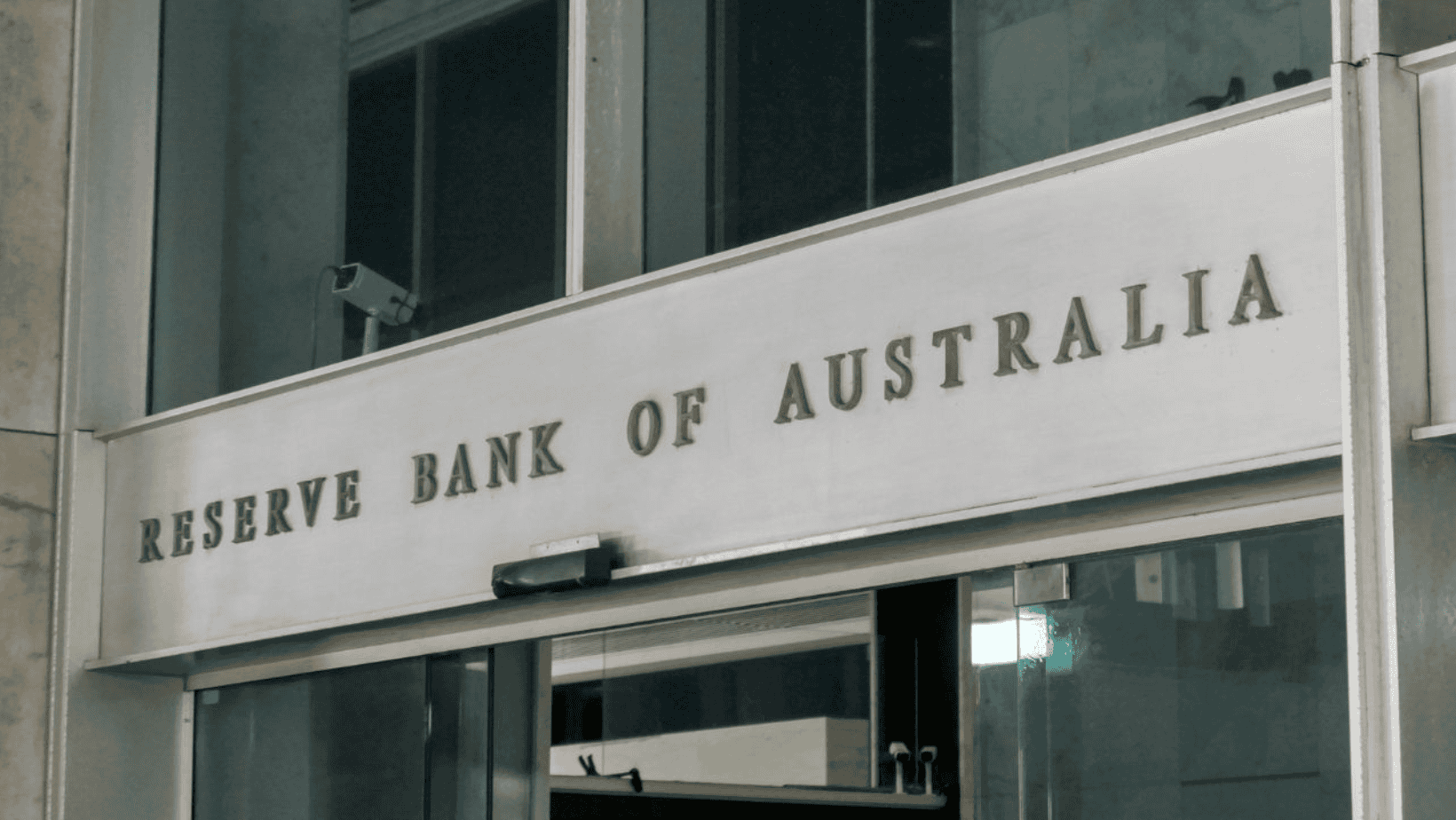
For most of 2026, predicting the Reserve Bank’s next move has been reasonably straightforward. Three hikes early in the year, then two holds in a row through July and August. But the meeting on 29 September is different. For the first time this year, the market itself doesn’t know which way this one goes, and neither, it seems, do the four major banks.
Here’s what’s actually being priced in, why the certainty evaporated, and what it might mean depending on where you sit.
Where things stood after August
At its August meeting, the RBA left the cash rate unchanged at 4.35% for a second consecutive month, extending a pause that followed three rate hikes earlier in the year (RBA media release). The Board’s language at the time was cautious rather than settled. It confirmed inflation remained too high and that it stood ready to raise the cash rate further if upside risks materialised.
That caution has proven well founded. Fresh inflation data released by the ABS on 26 August showed headline CPI easing to 3.5% over the year to July, down from 3.8% in June. On its own, that would normally support a hold, maybe even open the door to a future cut. But trimmed mean inflation, the measure the RBA actually leans on when setting policy, held steady at 3.6%, unmoved from the prior read and still well outside the RBA’s 2 to 3% target band (Aussie).
That single data point is doing a lot of work right now. It’s the reason a decision that looked settled in July has become the most genuinely contested call of the year.
What the market is actually pricing
RBA Rate Watch, which builds its probabilities from real financial contracts traded on the ASX rather than survey opinions, currently has the 29 September meeting at roughly 55% odds of a rate rise and 44% odds of a hold, with the remainder priced to a cut (RBA Rate Watch). That’s about as close to a coin flip as these things get, and it’s a meaningful shift from where market pricing sat even a few weeks earlier, when a hold was still the clear consensus.
The big four banks have split on timing rather than direction. NAB is now forecasting a 25 basis point hike at this very meeting, taking the cash rate to 4.60%. ANZ, CommBank and Westpac all expect the same size hike, but pushed out to the November meeting instead (Canstar). All four now agree a hike is coming before the end of the year, a genuine reversal from the position most of them held through the middle of 2026, when the consensus was that the tightening cycle had already finished and the only open question was when cuts might begin.
It’s worth sitting with how quickly that consensus moved. CommBank’s own economics team was confidently forecasting a hold through the rest of the year as recently as late July (CommBank). A single inflation print was enough to shift one of the country’s largest banks from “done hiking” to “hiking again within months.” That tells you something about how finely balanced the data actually is, not just about that one bank’s forecasting.
A Finder survey of more than 40 economists conducted ahead of the August meeting captured the mood well: while the clear majority still expected a hold in August itself, a large minority were already flagging at least one further hike before year end, even before the July CPI data landed (Finder). The uncertainty didn’t start with one data release. It’s been building for a while.
Why the dual mandate is shaping the calculus
Part of what makes this decision harder to read than a straightforward inflation call is the RBA’s dual mandate. Since the 2023 RBA Review, the Bank has operated under a formal mandate to pursue both price stability and full employment, rather than treating inflation as the only consideration (RBA speeches).
Deputy Governor Andrew Hauser laid out how that’s playing into the current decision in an interview with ABC’s 7.30 on 8 September. He acknowledged inflation remains the economy’s “one big problem,” even with growth around trend and unemployment near historic lows, but said the Board had deliberately chosen a slower path on further tightening to preserve as much of the labour market’s gains as possible. If that trade-off stops looking feasible, he said, the Bank would take another path (ABC News).
That’s a more candid admission than the Board’s official statements tend to offer, and it partly explains why the market is genuinely split rather than confidently pricing one outcome. A single-mandate central bank focused purely on the 3.6% trimmed mean reading might already have hiked again. A Board also weighing employment outcomes under its dual mandate has more reason to hesitate, and that tension is exactly what’s showing up in the 55/44 pricing split.
Why this decision matters more than most
Every RBA meeting matters to someone, but this one lands at a moment when borrowers are already behaving differently than they were a year ago. Two data points make that clear.
First, refinancing activity has hit a fresh record. Owner-occupiers refinanced $42.9 billion externally in the March quarter alone, up 8.7% on the same period a year earlier (ABS Lending Indicators). Borrowers who haven’t reviewed their rate since 2024 are now facing cumulative increases of more than $450 a month on the same loan size, as the gap between what existing customers pay and what new customers are offered keeps widening.
Second, and perhaps more tellingly, the share of new loans being written on fixed rates has collapsed to just 4.2%, according to AFG’s latest mortgage index. That’s a dramatic shift from the fixed-rate boom of 2021, and it reflects exactly the uncertainty this article is describing: with the next RBA move genuinely unclear, most new borrowers are choosing to stay flexible rather than lock in a rate that could look either very smart or very expensive within months.
Both trends point to the same underlying behaviour. Borrowers are actively managing their position rather than sitting still, and a market this evenly balanced is precisely the environment where that kind of active management pays off, or costs you, depending on which side of the decision you land on.
What this means depending on your situation
If you’re on a variable rate and haven’t checked where you sit against current market pricing, the record refinancing volumes suggest you’re increasingly in the minority. It’s worth finding out whether you’re paying more than a new customer at your own bank before the next rate decision adds another variable to the equation.
If you’re weighing up fixing part or all of your loan, the collapse in fixed-rate lending to under 5% of new loans isn’t a signal to avoid fixing altogether, but it is a signal that the market broadly sees more downside than upside in locking in today’s rates for an extended term. That doesn’t mean fixing is wrong for your situation, only that it’s worth going in with clear eyes about why the majority are choosing otherwise right now.
If you’re planning to buy in the next few months, it’s worth stress-testing your borrowing capacity against a scenario where the cash rate does move to 4.60%, not just against today’s settings. A pre-approval based on current pricing can look different within weeks if the RBA moves in either direction.
What to watch next
The RBA hands down its decision at 2:30pm AEST on 29 September 2026. Beyond the headline call itself, watch the language in the accompanying statement closely, especially anything referencing the employment side of the dual mandate. A genuine hold-versus-hike coin flip like this one means the wording the Board chooses to describe its reasoning will carry unusually heavy signal for what November holds, regardless of which way September actually goes.
If you’d like help understanding what either outcome would mean for your specific loan, your borrowing capacity, or your refinancing options, get in touch with the hfinance team. We work across 50+ lenders and can help you see exactly where you stand, before the decision lands rather than after.
This article is general information only and does not take into account your personal financial situation or objectives. Speak with an hfinance broker before making any lending decisions.